Tiny Horses, Big Responsibility: Managing Nutrition and Weight in Miniature Horses
Miniature horses may be small in size, but when it comes to care, their needs are anything but miniature. At Farmfari, our mini horses hold a special place in our hearts — they’re cheeky, intelligent, and endlessly curious. But one of the biggest challenges we face in caring for them is keeping their weight and nutrition in perfect balance.
These pint-sized equines are prone to certain health issues simply because of their size and metabolism. What’s a “harmless treat” for a full-sized horse can quickly lead to obesity or laminitis in a miniature. Understanding their unique dietary and exercise needs is essential for any carer or sanctuary.
Why Miniature Horses Need Special Nutritional Care
Miniature horses are genetically designed to survive on very little food, meaning they’re incredibly efficient at converting calories. While this was helpful in the wild, it poses challenges in domestic or sanctuary settings where food is abundant.
Common health issues caused by poor diet include:
- Laminitis – painful inflammation in the hoof tissue.
- Obesity – often leading to joint strain and insulin resistance.
- Colic – caused by overeating grain or rich pasture.
- Dental problems – due to improper feed size or texture.
At Farmfari, we tailor every horse’s feed to their individual needs — ensuring that even our smallest residents get the right nutrients without excess calories.
The Farmfari Feeding Philosophy for Miniature Horses
1. Forage First
A high-fibre, low-sugar diet is key. Miniature horses thrive on good-quality grass hay rather than lush green pastures. We weigh hay portions carefully to match their body size — usually 1.5–2% of their ideal body weight per day.
Tip: Avoid feeding lucerne hay or high-energy mixes unless recommended by a vet, as these can quickly cause weight gain.
2. Grain-Free Goodness
Grain and processed feeds can be too rich for minis. Instead, we use vitamin and mineral balancers mixed with chaff or soaked beet pulp to keep their digestion healthy without the calorie overload.
3. Monitor Body Condition Weekly
Miniature horses often carry fat in hidden spots like the crest of the neck or around the rump. We use the Henneke body condition scoring system, checking each horse’s weight regularly. This helps us make small feed adjustments before issues arise.
4. The Role of Movement
Even though minis are small, they need daily exercise to stay healthy — gentle play, paddock roaming, or walks around the sanctuary. Regular movement supports digestion, muscle tone, and mental wellbeing.
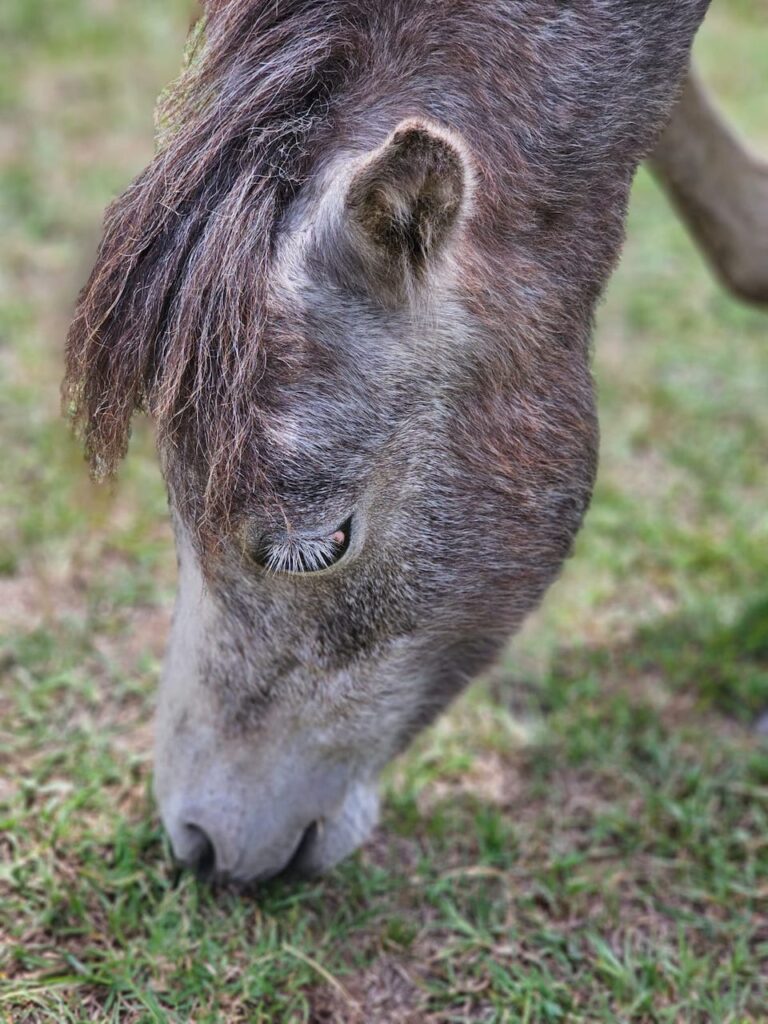
How Much Does a Miniature Horse Eat?
Here’s a simple exercise:
If your miniature horse weighs around 120 kg, calculate 1.5% of that as hay:
➡️ 120 x 0.015 = 1.8 kg of hay per day
Now imagine splitting that into 2–3 small feeds across the day. A practical way to visualise portion control — and how “less” can actually mean more health for these tiny horses.
FAQs About Miniature Horse Nutrition
Q: Can miniature horses eat grass?
A: Yes, but access should be limited. Rich, green pasture is often too high in sugar and can cause laminitis. Grazing muzzles or dry lots are a good alternative.
Q: Do minis need supplements?
A: Usually yes — low-calorie vitamin and mineral mixes help fill nutritional gaps from restricted grazing.
Q: How often should minis see a vet or dentist?
A: Minis benefit from bi-annual dental checks and regular veterinary assessments to monitor metabolic health.
Caring for Minature Horses
Caring for miniature horses is a delicate balance between restraint and love. At Farmfari, every handful of hay and every gentle touch is part of a promise — to provide the nourishment, safety, and respect these intelligent beings deserve.
Because no matter their size, every horse deserves to live with dignity, health, and freedom.