Cows are often misunderstood as passive or simple animals, yet science and lived sanctuary experience tells a very different story. Cows are deeply social, emotionally aware, and constantly communicating with those around them. At Farmfari, learning to “listen” to cows without words is central to how we care for them.
Understanding bovine communication allows humans to respond earlier, reduce stress, and build safer, more trusting relationships, particularly for cows who arrive from uncertain or neglectful backgrounds.
Why Understanding Cow Communication Matters
Cows evolved as herd animals, relying on subtle signals to maintain safety, connection, and harmony. In captive or sanctuary settings, when these signals are misunderstood or ignored, cows can experience:
- Heightened stress
- Social isolation
- Delayed health intervention
- Reduced confidence around humans
Recognising communication is not about control — it’s about relationship-based care.
How Cows Communicate: More Than Just Mooing
1. Body Language in Cows
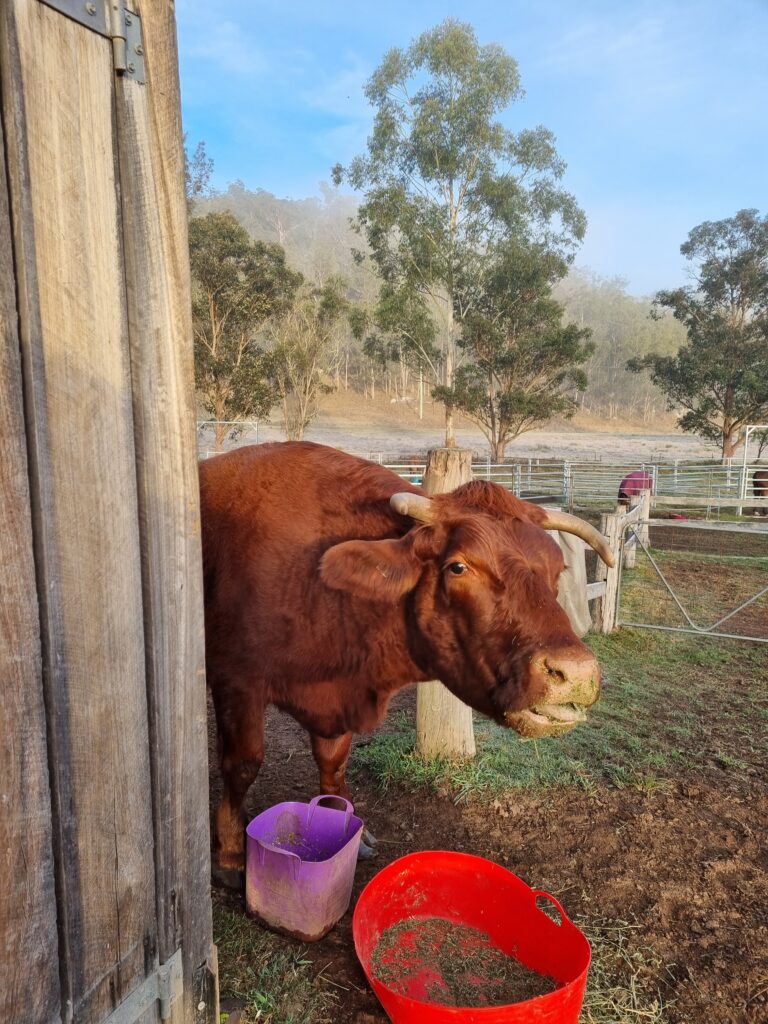
Cows use their entire body to express comfort or concern. Key signals include:
- Ear position (alert, relaxed, pinned back)
- Tail movement (gentle swishing vs stiff or clamped)
- Head position (lowered, turned away, or leaning in)
- Weight shifting or reluctance to move
At Farmfari, we treat changes in posture as early information — often preceding visible illness or injury.
2. Vocalisations and What They Mean
Cows vocalise for many reasons, including:
- Calling to herd members
- Expressing discomfort or uncertainty
- Anticipating feeding or routine changes
- Seeking reassurance
Research shows cows recognise individual voices and respond differently depending on emotional context.
University of Sydney – Animal Behaviour and Welfare
https://www.sydney.edu.au/science/our-research/research-areas/veterinary-science.html
Emotional Intelligence in Cows
Scientific studies confirm cows can:
- Form long-term friendships
- Experience stress when separated from companions
- Show optimism or pessimism based on past experiences
- Remember both positive and negative human interactions
This emotional memory means that how humans respond today shapes how cows feel tomorrow.
Common Needs Cows Communicate Through Behaviour
Comfort and Safety
Signs a cow feels safe include:
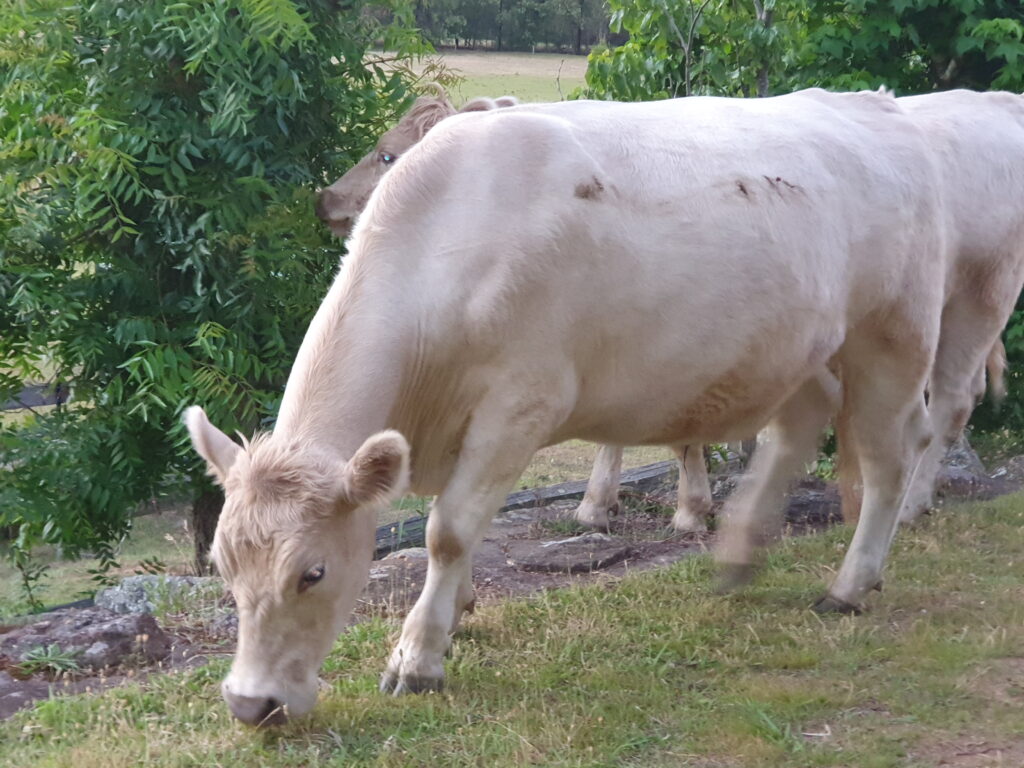
- Relaxed grazing
- Lying down fully rather than half-resting
- Grooming behaviours
- Calm social interactions
Discomfort or Illness
Early indicators may include:
- Standing alone
- Reduced appetite
- Changes in rumination
- Avoidance of movement or touch
Early recognition allows for prompt care and prevents escalation.
How Farmfari Responds to Cow Communication
Routine Without Rigidity
Cows thrive on predictable rhythms. At Farmfari, routines exist — but flexibility remains when individuals need extra support.
Observation Over Intervention
We prioritise watching first, acting second. This reduces stress and allows cows to express needs naturally.
Herd-Aware Care
Health and wellbeing are assessed within the context of herd dynamics, not isolation.
This approach aligns with best-practice welfare standards while honouring each animal as an individual.
RSPCA Australia – Caring for Cattle
https://www.rspca.org.au/what-we-do/our-role-caring-animals/farm-animals/cattle
The Human–Cow Connection
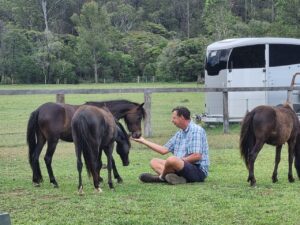
Many visitors are surprised by how cows respond to calm human presence. When treated with patience and respect, cows often:
- Approach voluntarily
- Engage in quiet curiosity
- Mirror relaxed body language
This mutual regulation — where humans slow down and cows respond in kind — reflects the therapeutic nature of interspecies connection.

Next time you’re near cows, ask yourself:
- Are they moving freely or hesitantly?
- Do they choose to approach or keep distance?
- How does my own energy affect their response?
Encourage readers to share this reflection with others to promote compassionate animal understanding.
Why This Matters in a Sanctuary Setting
Many cows arrive at sanctuaries carrying emotional and physical stress from previous environments. Learning to listen — without force, without expectation — allows healing to occur at the animal’s pace.
This level of care requires:
- Time
- Education
- Resources
- Community support
Cows speak constantly through posture, movement, sound, and silence. When humans learn to listen, care becomes quieter, safer, and far more effective.
At Farmfari, we believe that respectful listening is not just animal care it’s a form of stewardship that benefits animals, humans, and the land we share.