At first glance, miniature horses may seem like perfectly scaled-down versions of their full-size relatives. But while their size is different, their needs, intelligence, and emotional depth are just as significant.
At Farmfari, we are often asked questions like these. Are miniature horses easier to care for? Do they need less space? Are their personalities different?
The answer is simpler than you might think.
Let’s take a closer look.
Size Changes Space — But Not Core Needs
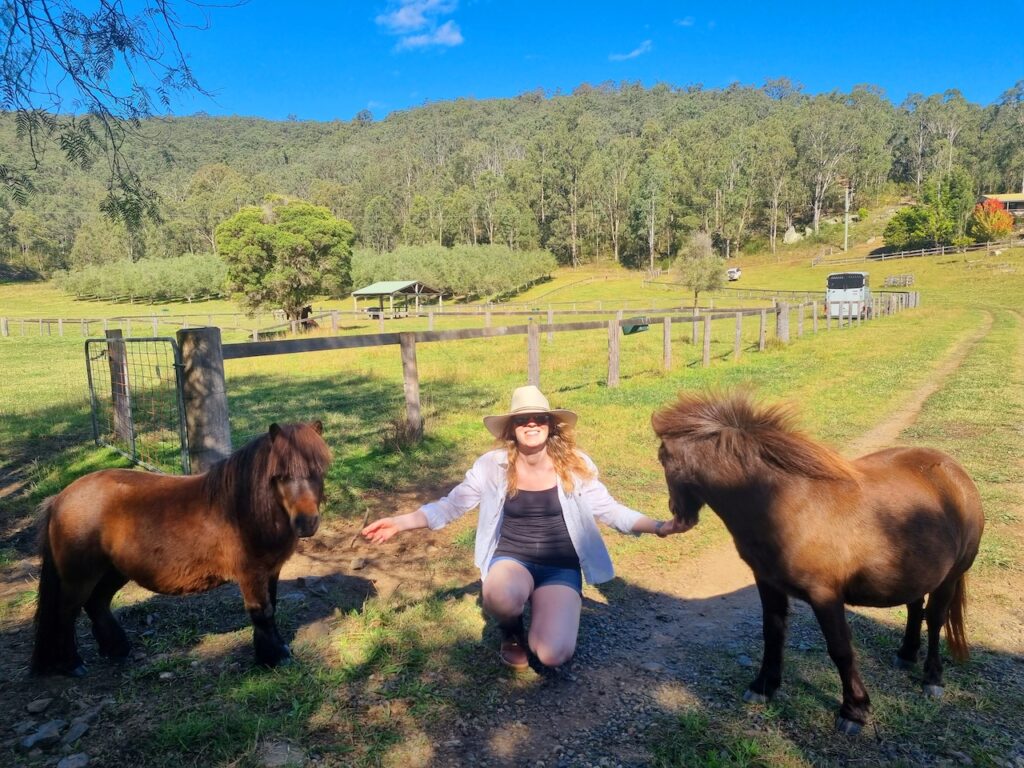
Miniature horses usually stand under 34 to 38 inches at the withers. Full-size horses, by comparison, can be all over the place, from smaller ponies like the Shetland to big draft breeds such as the Clydesdale.
But here’s the thing size doesn’t change what it takes to care for a horse. Miniature horses still have all the same needs, responsibilities, and social complexity as their larger relatives.
They need safe, secure fencing, enough pasture to move and graze, shelter from wind, rain, and sun, regular hoof trimming, dental and veterinary care, and friends because horses are social creatures.
Even though they might need a little less space than a full-size horse, miniature horses still need room to roam, explore, and behave like… well, horses.
If you’d like a deeper look into sanctuary horse care, you can read our related post:
Beyond Hay and Hooves: The Real Daily Needs of a Sanctuary Horse
https://www.farmfari.com/beyond-hay-and-hooves-the-real-daily-needs-of-a-sanctuary-horse/
In fact, the RSPCA Australia notes that all equines no matter their size require proper exercise, shelter, nutrition, and social companionship.
https://www.rspca.org.au/
Size does not reduce responsibility.
Feeding & Health Considerations For Miniature Horses
One common misconception is that miniature horses are “low maintenance.”
In reality, they can be more prone to obesity and metabolic conditions because they are such efficient grazers. Their smaller frame means their diet needs careful management to keep them healthy.
Full-size horses also need balanced nutrition, of course, but miniature horses often require even closer pasture monitoring and controlled feeding to prevent health issues.
At the end of the day, both miniature and full-size horses share the same essential needs: routine farrier visits, dental checks, parasite management, vaccinations, and regular veterinary care.
For broader equine care guidance, Equestrian Australia provides educational resources for responsible horse ownership.
https://www.equestrian.org.au/
Care is not about scale it’s about consistency and understanding.
Personality of Miniature Horses & Full-size More Similar Than You Would Think
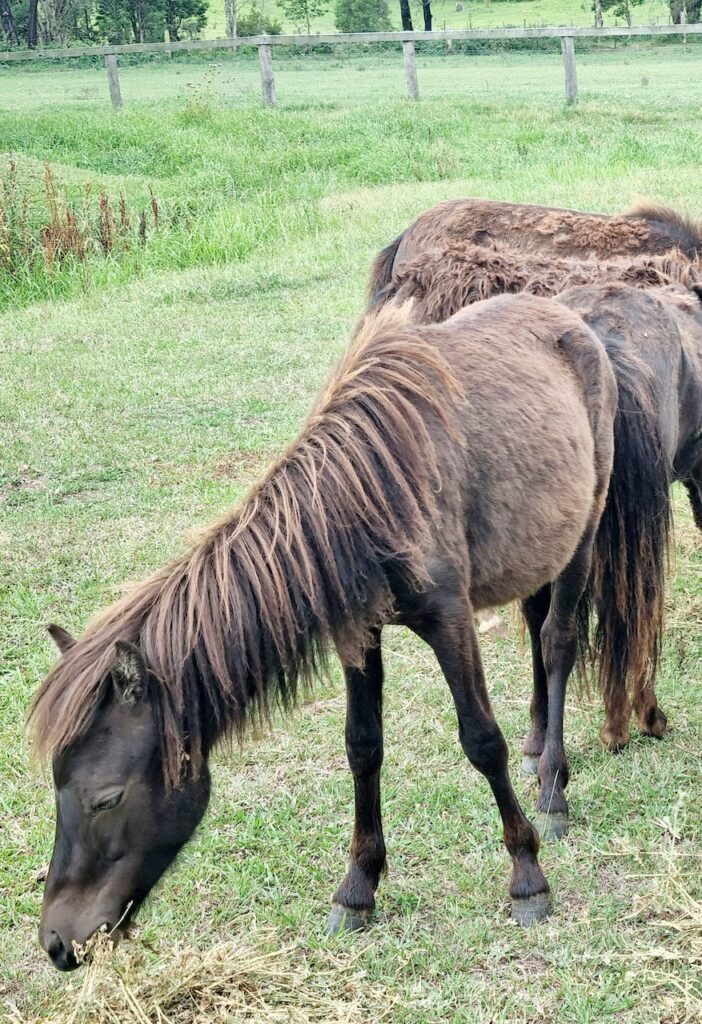
This is where the comparison becomes truly beautiful. Miniature horses and full-size horses share the same emotional intelligence and social depth.
Both form strong herd bonds, experience curiosity and caution, respond to calm and steady handling, and seek safety within trusted relationships.
Miniature horses are often bold, playful, and expressive. Their small stature can make their personalities feel larger than life. Full-size horses can be steady, intuitive, and deeply aware, offering quiet reassurance and presence in their own way.
If you’re interested in how animals influence your emotional wellbeing, you might also enjoy reading our other blog on:
How Animals Teach Us About Mindful Living
https://www.farmfari.com/how-animals-teach-us-about-mindful-living/
When horses are not asked to perform or produce for us, but they simply are allowed to live in a sanctuary environment, their personality shines regardless of their size.
Space & Social Needs For Both Miniature Horses & Full-Size
Horses are herd animals whether miniature or full-size. Because of this, keeping them alone is never ideal.
Both types of horses thrive on companionship. In fact, miniature horses shouldn’t be isolated simply because of their size; their need for social connection is just as strong as that of larger horses.
Space matters too. While paddock size can vary depending on the environment, movement is essential — it keeps joints healthy, digestion running smoothly, and minds engaged.
At a sanctuary like Farmfari, we prioritise their emotional and physical wellbeing by focusing on:
- Stable herd bonds
- Safe introductions
- Respect for individual temperament
- Ample space for grazing and roaming
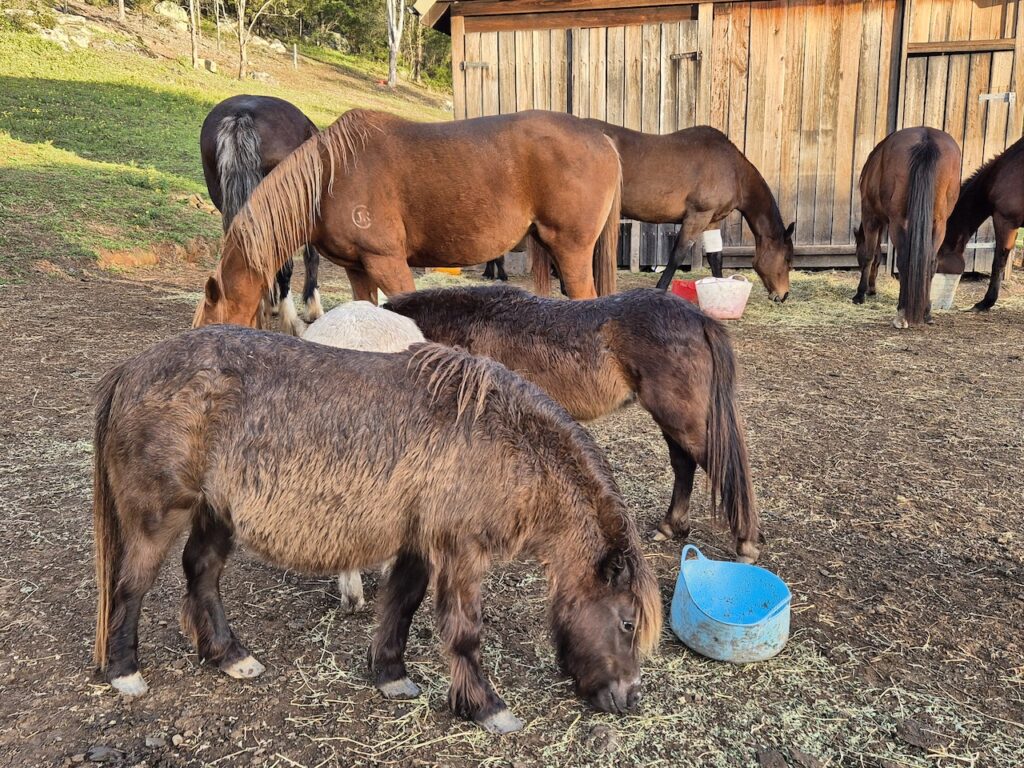
Ultimately, sanctuary life isn’t about controlling their every step. It’s about creating an environment where they feel safe, valued, and free to be themselves — whether they’re a tiny trotter or a gentle giant.
The Responsibility Behind the Charm
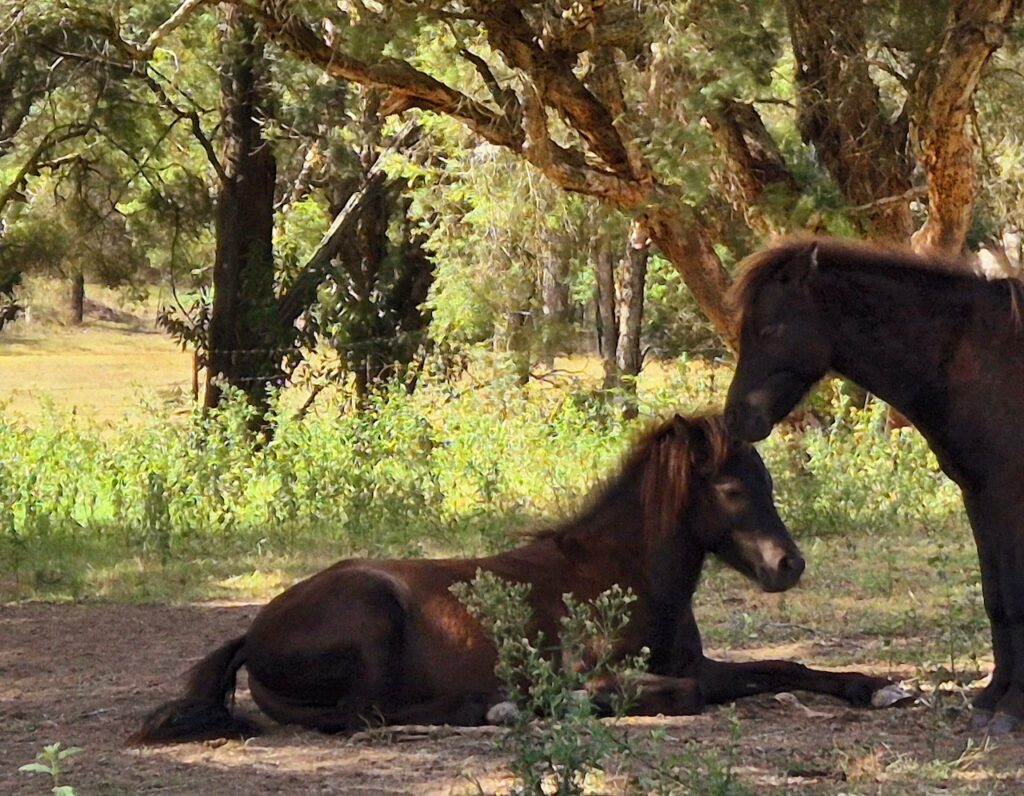
Miniature horses often catch the eye because of their size. They are approachable, gentle-looking, and endearing.
But small does not always mean simple. They can have complex personalities and strong, unique behaviours of their own.
They can live 25 to 35 years. Their hooves grow at the same rate. They need companionship just as much. Their awareness, their emotions, their presence are all as profound as a full-size horse.
Choosing to care for any horse, miniature horses or full-size, is a long-term commitment built on respect, understanding, and knowledge.
Presence Over Proportion
At Farmfari, we don’t measure a horse by hands high.
A full-size horse can stand quietly, watching over everything with calm confidence.
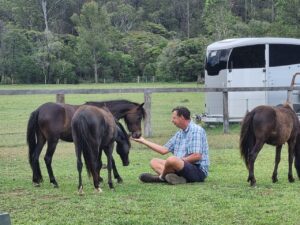
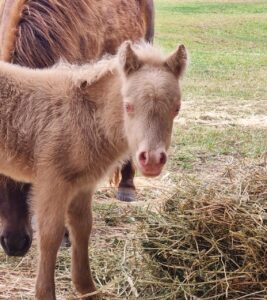
A miniature horse can trot forward, nose twitching, eager to explore something new.
Their size may be different, but their capacity for trust, connection, and emotion is the same.
When both miniature and full-size horses are given safety, stability, and compassion, they both thrive each in their own way.